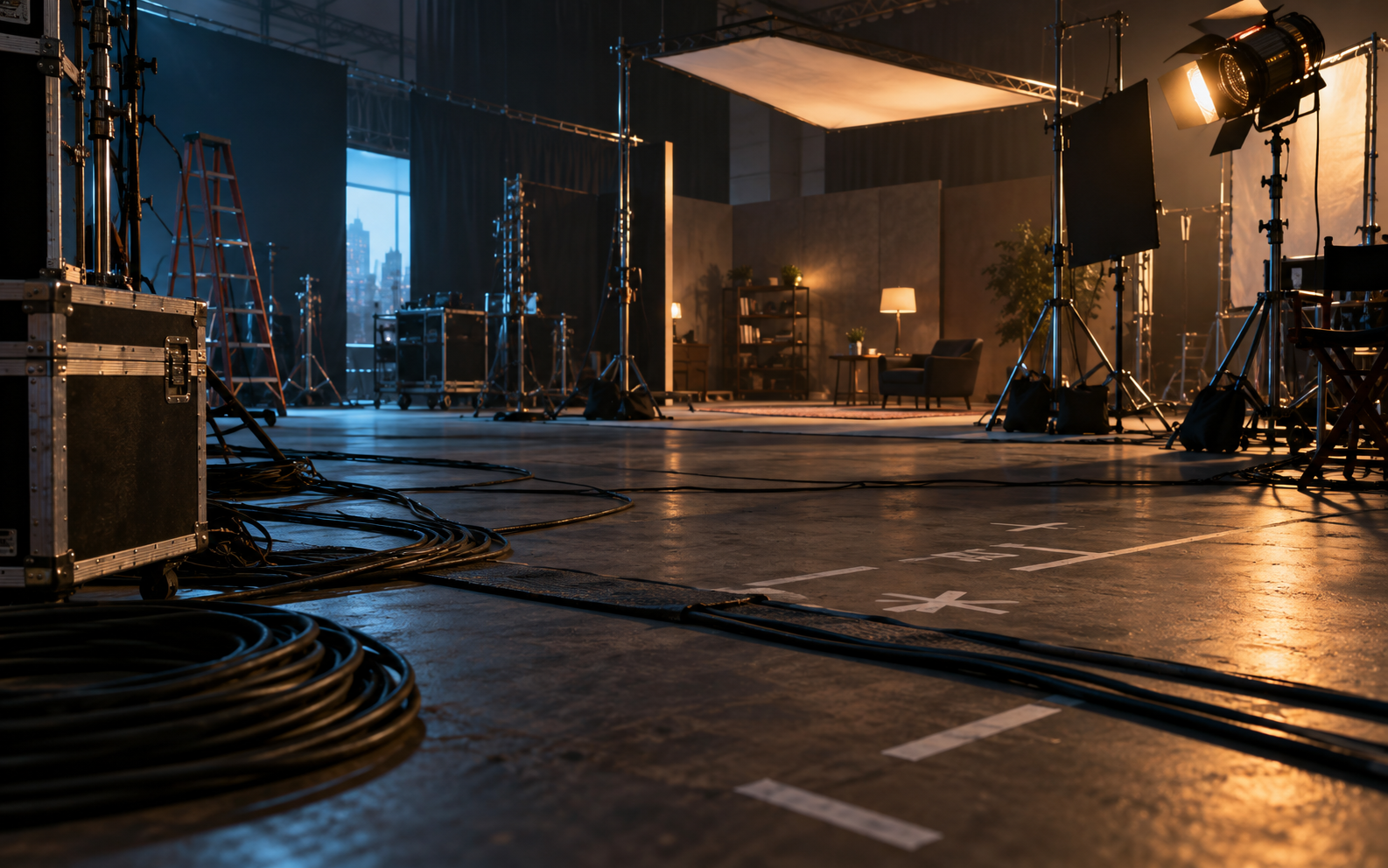
When an idea takes shape, people see the result: the film, event, product or presentation. They do not see the work that made it possible. I spent years doing that work, first in production and later in project management, and I still believe it explains everything else.
Photography and audiovisual production have an implicit rule: if the shoot runs smoothly, somebody spent the preceding weeks making sure it would. Nobody notices, and that is as it should be — the audience should see the content, not the effort. But those on the inside know that the imbalance between visible and invisible time is almost embarrassing.
The rule applies to any project in which an idea must become something concrete. It is why good project management can appear unnecessary: the problems it was meant to solve never materialised.
Pre-production is where everything is decided
Audiovisual work calls it pre-production; elsewhere it may be planning, scoping or kick-off. The substance is the same: translating an idea into concrete decisions. What is needed, who will do it, by when, with which resources, and what happens if something fails to arrive. It is the least gratifying phase because it produces nothing visible, and the most important because every decision avoided here becomes an urgent problem later.
I have learned to recognise a struggling project by one symptom: compressed preparation. When preparation is cut because time is short or because it looks like a luxury, the time saved returns multiplied during delivery as revisions, delays, rushed decisions and people waiting for other people.
Logistics is not a detail
One kind of work that nobody wants to do determines the success of almost everything: logistics. Where will we shoot, how will we get there, who brings what, where will people eat, who has the keys, what if it rains? They look like details until one is missing and everything stops. I saw that often enough in production to develop enormous respect for people who handle logistics well.
The same applies to a communication project, an event or a technology implementation. Logistics is the physical translation of the plan. If the plan is good and the logistics are not, the plan does not exist. By its nature, logistics goes unnoticed when it works.
Revisions are the work, not an interruption
It took time for me to make peace with revisions. At first, they felt like interruptions to the real work: I made something, comments arrived and I had to redo it. Experience taught me that revisions are the real work. The first version of anything is a hypothesis; revision is how that hypothesis meets reality, constraints and previously unspoken expectations. A project without revisions is not perfect — it is a project nobody examined closely enough.
Managing revisions well is a discipline in itself: gather them systematically rather than piecemeal, distinguish improvements from requests that move towards a different objective, and record what was decided and why. It is invisible work in its purest form: when done well, the client sees only that the final version is better than the first.
Unexpected events are rarely unexpected
The final category of invisible work concerns surprises. I use that word cautiously because most surprises I have encountered in projects were not unforeseeable. They were foreseeable but unplanned for, which is different. A late supplier, bad weather, an ill key person, the wrong file format or a client changing their mind is no surprise to anyone who has delivered a similar project.
The invisible work is preparing for what will probably go wrong without knowing precisely what it will be: time in reserve, a second supplier already contacted, an alternative plan for the day. If everything goes well, this effort looks wasted. It is also exactly what separates a project that holds together from one that collapses at the first shock.
"If the day of delivery looks easy, somebody worked very hard to make it look that way."
Why talk about it
I discuss this work because, moving from production to project management and then sales, I noticed how consistently people who do not perform it underestimate it. In negotiations, preparation, coordination and management are often treated as incidental costs to compress. In reality, they are the principal cost — the one that makes everything else possible. Recognising and explaining that has become an important part of my work today.
An idea taking shape is almost always the result of many people doing well the things nobody will notice. That is not an injustice to correct; it is the nature of the work. But it is worth saying occasionally.
The same work appears in building events that leave a mark and in the RESET experience.