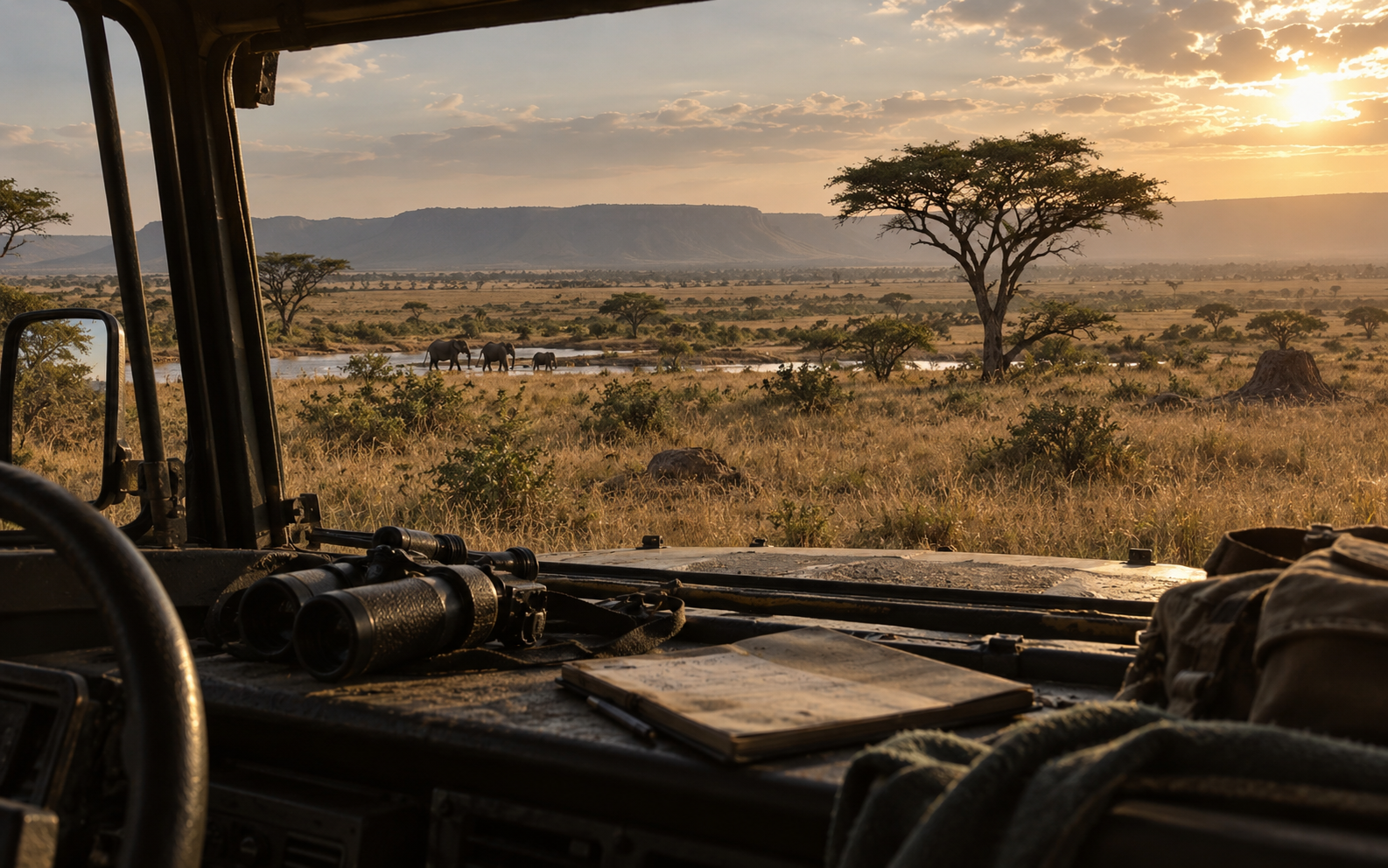
Africa entered my life during my technical-school years, through my first journeys and photography. I have returned several times since then and built relationships that changed both the way I travel and the way I tell stories. It is not a backdrop for a personal experience: it is an ongoing relationship made of places and, above all, people.
Speaking of Africa in the singular is already a simplification. An entire continent is often reduced to landscape, emergency or a promise of transformation for somebody arriving from Europe. These are convenient narratives because they place the traveller at the centre and turn everything else into scenery. Looking back at my own photographs, I soon realised how easy it is to reproduce them even when setting out with different intentions.
Returning repeatedly corrected this perspective. Going back means meeting people again, seeing changes that a single visit cannot reveal and accepting that places continue without us. Relationship gradually replaces novelty. You stop looking only for what appears different and begin to recognise ordinary complexity: work, family, ambitions, difficulties, humour and contradictions.
Photography can bring us closer or appropriate
A camera taught me to observe, but it does not automatically make the gaze respectful. Photographing somebody means choosing how that person will be seen by people who were not there. The risk is using a face to confirm a story already decided: poverty, strength, authenticity, or any label that makes an image immediately legible. Yet that legibility can erase the person.
Over time I learned to take fewer pictures and have more conversations, to ask whether a photograph was necessary and what it would give back. I have not always succeeded, and I do not regard the tension as resolved. The point is to keep it visible. A good image does not automatically authorise its use; an encounter does not become our material simply because we were there with a camera.
Returning changes our relationship with places
A first visit is dominated by surprise. Later visits can become relationship if continuity is allowed to grow. Some people I met over the years became points of reference with whom I could plan, understand what was appropriate and read situations I would have misinterpreted from outside. This does not make me an insider in contexts that are not mine. It makes me more aware of the distance and less inclined to fill it with assumptions.
Returning also carries a simple responsibility: not behaving each time as though a place begins when we arrive. Remember conversations, keep promises, share photographs and listen to what has changed. These gestures transform travel from the consumption of experiences into a relationship over time. The difference may not always be visible in a photograph, but it shapes how that photograph is made and described.
Avoiding the transformation story
Travel stories often use a familiar structure: someone leaves, encounters a different reality and returns transformed. It is effective, but it risks using people and places as instruments for the narrator's growth. Travel has certainly changed me, but that change is not the moral centre of what I encountered. It is a private consequence, not the value other people had for me.
I prefer to describe more concrete shifts. I learned to prepare more carefully, not to assume that my way of organising is the correct one, and to distinguish perceived urgency from actual urgency. I saw how a relationship built over time makes a different kind of journey possible. These lessons are useful, but they do not require turning a continent into a lesson prepared for me.
"Returning to the same place does not give us the right to tell it better. It gives us the responsibility to listen more carefully."
An ongoing relationship requires restraint
Continuing to travel and tell stories requires us to update our gaze. Words that seemed appropriate years ago may no longer be; images I once considered successful now raise different questions. This revision is not censorship of the past. It is evidence that the relationship continues even when I am not travelling and that what I have learned changes how I read what I did.
Africa is connected to an important part of my personal and professional history: the beginning of my passion for photography, relationships maintained over the years and journeys organised with other people. Precisely for this reason, I must resist turning it into a simple identity marker. I do not own those places because I have visited repeatedly, and I do not speak for the people I have met.
I can describe my point of observation, state its limits and allow relationships to correct the narrative. I can choose images that do not turn a landscape or a person into evidence of my adventure. I can return respectfully, work with people who know the territory and remember that every journey crosses lives already in progress. Saying that Africa is not a backdrop means, first of all, removing myself from the centre of the frame.
This care also shapes what deserves to be published. Not everything that felt intense to me is necessarily meaningful to whoever sees it, and not everything that can be photographed has to become public. Leaving some experiences outside the story can be a choice of precision, not a loss. It reduces the pressure to produce constant proof of the journey and allows relationships to exist without being converted into images.
Restraint remains a practice, not a declaration.