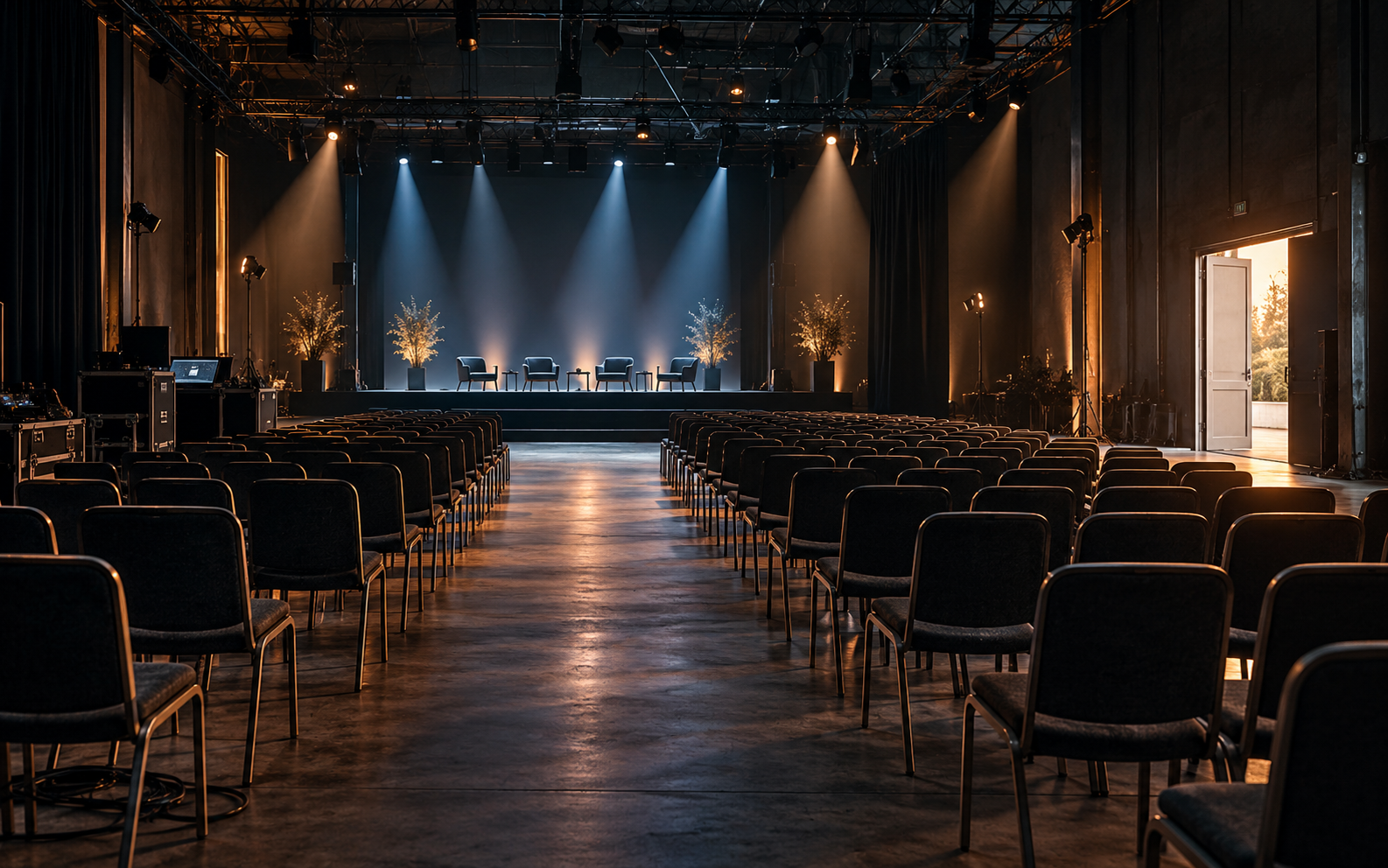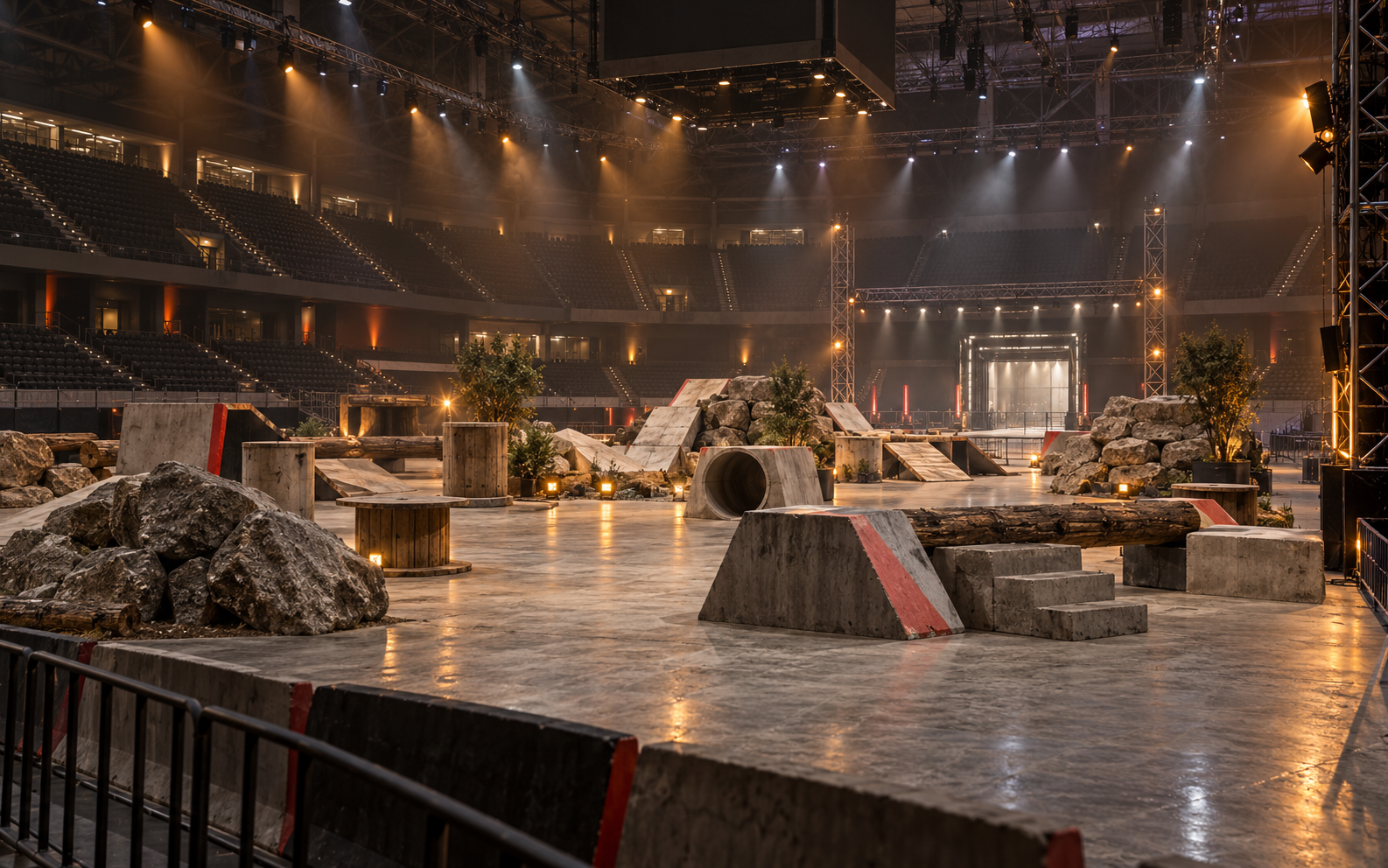
TRIALISM began with Francesco Gilardi in 2024 and is still evolving. It grew around trial and sport, a world I knew less well than others. Entering it with humility was the first requirement for contributing to concept, branding, content, sponsorships, partnerships and community without pretending to belong before that belonging had been earned.
TRIALISM is not a conference and does not revolve around speakers. It seeks to connect people who practise, follow, support or enable trial. The event is one expression, but the community is not confined to the day people meet. It lives through continuous content, relationships with partners and sponsors, and conversations before and after every occasion.
Francesco and I began with complementary strengths. He brought deep knowledge of trial and its people; I could help turn an intuition into a concept, identity, narrative and proposition for different stakeholders. Neither side was sufficient alone. Sporting credibility without a shareable form would remain internal; communication without that credibility would be empty packaging.
Enter without taking the centre
When entering an unfamiliar world, the temptation is to simplify it for communication. That is dangerous. Communities immediately recognise when their language is used as an aesthetic by someone who does not understand its codes. Our first task was therefore to listen: understand disciplines, histories, motivations, internal differences and what participants genuinely value.
Humility did not mean silence. It meant proposing hypotheses and testing them with the people who live that world. A concept works when it reflects something the community recognises while opening new space. Reaching that point takes revision, conversation and a willingness to discard elegant ideas that do not belong.
From concept to a workable identity
Branding did not arrive after the project; it helped define it. Giving TRIALISM a name, visual form and tone forced us to clarify the experience we wanted and what it should not become. The identity had to speak to trial without trapping it in a familiar image, while helping outside partners understand why participation mattered.
The same principle guided content: do not use sport as decoration, but portray people, practices and perspectives with sufficient depth. Content keeps the project alive between events, helps newcomers find their bearings and returns value to the community instead of merely promoting the next appointment.
Sponsors and partnerships as parts of the project
Sponsorships and partnerships are necessary for sustainability but become fragile when treated as logos to add. The task is to identify a credible role and genuine value for each partner without distorting the participants' experience. Companies, sporting organisations and operators require different conversations because they bring different objectives and responsibilities.
A partnership works when the community does not have to interrupt its experience to notice the sponsor. It may provide resources, expertise, access or content that improves the project. Building one requires translating trial into a proposition a partner understands while protecting the project from requests that would make it less authentic.
A community cannot simply be declared
The word community is often used as if followers or attendees were enough. Through TRIALISM it became more concrete for me. A community exists when people recognise one another, not only the project convening them; when conversations no longer depend on organisers; when people feel able to contribute rather than merely attend.
That relationship cannot be built through one campaign. It requires continuity, space and some surrender of control. The project needs a direction while allowing people to inhabit it in unforeseen ways. Our task is to create the conditions, listen and adjust without turning every interaction into content or a commercial opportunity.
TRIALISM is still evolving, so it has no final moral. Its method remains under test: enter respectfully, build with people who know the context, make contributions visible and keep identity aligned with sustainability. In a world I initially did not know, the most useful thing I could bring was not an answer but a way of asking questions together.
Community work also means accepting timescales less controllable than those of a campaign. Trust does not grow at the rate content is published, and partnerships cannot be measured only through one event's visibility. Some signals are qualitative: people return, suggest contributions, introduce others or voluntarily assume a small responsibility. They indicate that the project is becoming shared space rather than an initiative observed from outside.
The language used to describe TRIALISM also remains under review. A sporting project can easily become emphatic, turning every gesture into heroism. We seek balance: recognise technique, commitment and spectacle without reducing people to heroic images. That is more credible for practitioners and more accessible to newcomers.